By: Asher Proctor
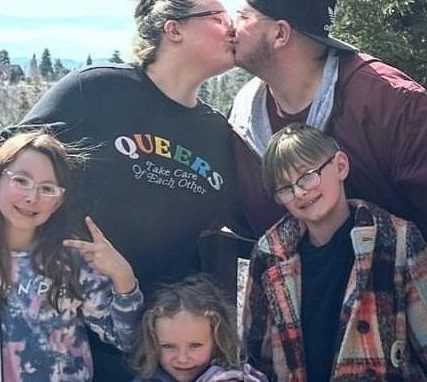
Rory and I fell in love fast. We had all the serious conversations during our short friendship prior to even starting our relationship. We talked about money, goals, parenting styles, religion, politics, extended family involvement, and even our children’s other parents. Being that I am transgender and Rory had previously dated women, neither of us were strangers to the lesbian stereotype of “U-Hauling” in a relationship, but the major difference here was that our previous experiences with “U-Hauling” didn’t have the same struggles as our current situation would have, since we both had our own kids now. There’s a huge difference in uprooting your life because you have fallen in love verses uprooting your childrens’ lives because you have fallen in love.
( If you haven’t read our love story yet, Definitely check out the blog post right before this one titled “Modern Love Story” where I explain how a glitch in an online app led us to blending our families.)
- Don’t expect your kids to love your new partner or their new sibling(s) like you do. It’s important to remember that even though you love your new partner, this person may symbolize a lot of negative things in your child’s life. In your child’s head- This is the person who is taking away their parents attention. This is often the person who symbolizes that a child’s parents really won’t get back together (no matter how long the parents have been apart).
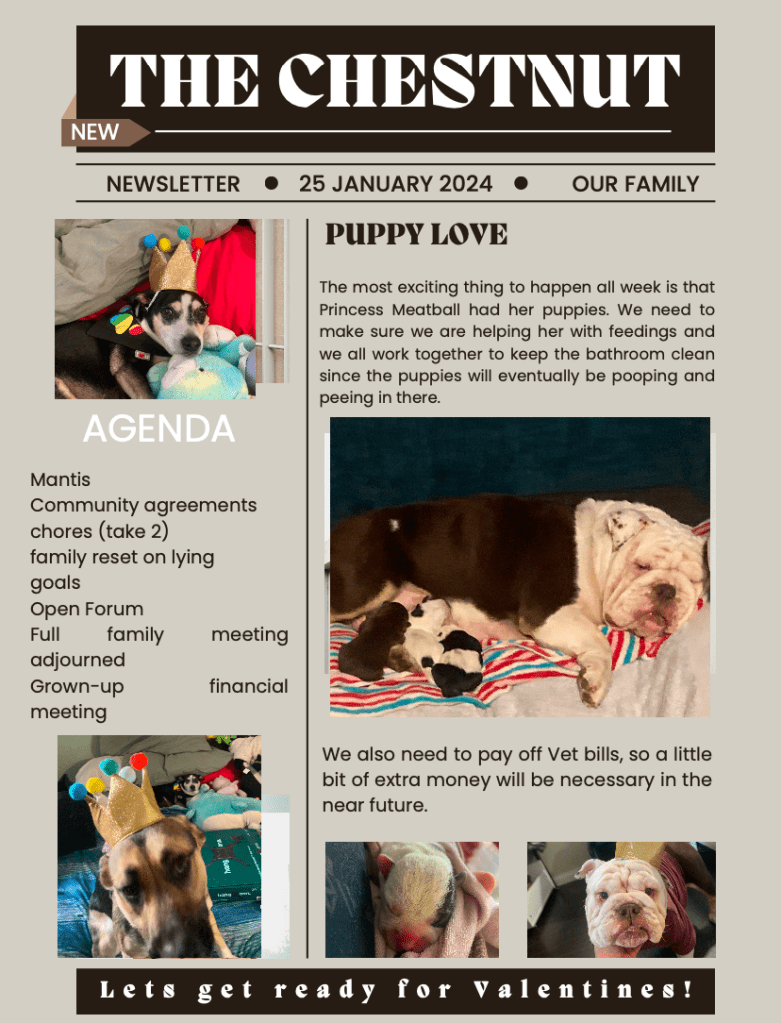
- Family Meetings are non- negotiable. I don’t care if your kids are toddlers, teens, or any age between, if they are able to communicate, they are old enough to have a voice in your family. We started doing weekly family meetings early on, and although we don’t do them as often now, they were super helpful during the first year of us blending our family. I would type up a short newsletter/agenda for the meeting and we would set aside about an hour one day a week where we would discuss the big things going on in our lives. (Attached below is an example of one of those newsletters).
- All adults should treat all of the children with kindness and respect. This one should come as a no-brainer, and most of the time, I don’t see this as an issue for the parents in the blended family, but a few of the extended family members are definitely guilty of this issue in our family. I don’t expect every single adult to treat every child exactly the same. There are differing levels of relationships, but being kind and respectful of all of the children involved is a necessity. Our first Christmas together as a blended family, one of Rory’s grandparents sent a package with gifts for Rory’s biological daughter. My two biological children didn’t receive anything in the package. How this family member chooses to spend her money is not my business, and none of us expected gifts from that family member, especially since the two older kids and I had never even met this grandparent. The problem, for us, wasn’t in the gifts coming for just Anastasia. The problem was that this family member wrote in sharpie all over the wrapping paper of each gift “THIS GIFT IS FOR ANASTASIA ONLY!” “THIS GIFT IS NOT TO BE SHARED!” “THIS GIFT IS FOR MY ONE AND ONLY GRANDAUGHTER!” It was incredibly uncomfortable to open a package that had been delivered to my parents’ house (since that was where we were celebrating that year) that was so passive-aggressively wrapped. Rory and I felt incredibly awkward. My extended family, who had welcomed Anastasia as one of their grandkids with no questions looked confused. The big kids felt uncomfortable, and one of them even asked me why “…Anastasia’s grandma thought [they] would steal her Christmas presents.” A year and a half later, and our family’s relationship with that grandparent is practically still non-existent.
- One-on-one time is more important now than ever before. This goes for all of the children and both of the parents. It’s incredibly helpful for each individual in the family to create a bond with each of their family members. This doesn’t have to be just big planned outings, but trading off on who makes a quick trip to the grocery store for a last minute item can really give children and their parent, or their new bonus parent time to connect organically.
- Remind your children that there is always room for their other biological family members (as long as they are safe grown-ups). In our family, the two older kids didn’t have a mom-figure. They were both super young when I started my transition, and were used to explaining that they had two dads who were divorced. Welcoming a mother-figure into their lives was a lot different for them than it was for Rory’s biological daughter. Victoria and Lainey didn’t have the same fears and mixed feelings about calling Rory their mom that Anastasia had about calling me her dad. Anastasia’s dad isn’t as involved in her life as he is currently struggling with active addiction. The word “Dad” felt like a negative word to her based on her experiences with her dad, and calling me dad felt almost like giving up hope that her dad would ever get better. With time, her and Rory made peace with the fact that no matter what, I was never going to try to take away Anastasia’s connection to her dad and his family. She doesn’t currently have a relationship with him, but we talk about him all the time. There are pictures of him in all our family photo albums, and we regularly keep in contact with his mom, Anastasia’s grandmother. Anastasia calls me dad, but she also talks about hoping that someday her other dad will get better so we can all spend time together, and we all hope that happens, too.
Remember that the first 2-5 years are the hardest when it comes to blending a family, but making sure that you are intentional about including all five of these tips into your life can make a world of difference in bringing two families together as one.

 Neuroblended
Leave a comment